.png)
The short answer. To rebrand without losing customers, preserve the equity you already have: audit what customers genuinely recognise and value, evolve those elements rather than erasing them, roll the change out in stages instead of overnight, and over-communicate at every step. Most brands lose customers not because they changed, but because they changed too much, too fast, with no explanation.
A rebrand is one of the highest-upside and highest-risk moves a business can make. Done well, it repositions you for the next stage of growth. Done carelessly, it confuses loyal customers, erases recognition you spent years building, and shows up as a dip in sales the quarter after launch. The difference is almost never the design — it's the process. Here's the framework we use to change a brand without breaking it.
First: do you need a rebrand, or a refresh?
A refresh modernises what you have — tidier logo, updated colours and type, a sharper look — while keeping you clearly recognisable. A rebrand changes something fundamental — your name, your positioning, who you're for. Refreshes are low-risk and often all you need. Reserve a full rebrand for real strategic reasons: you've outgrown your name, merged, changed your business, or your identity actively works against where you're going. If a refresh solves it, don't rebrand.
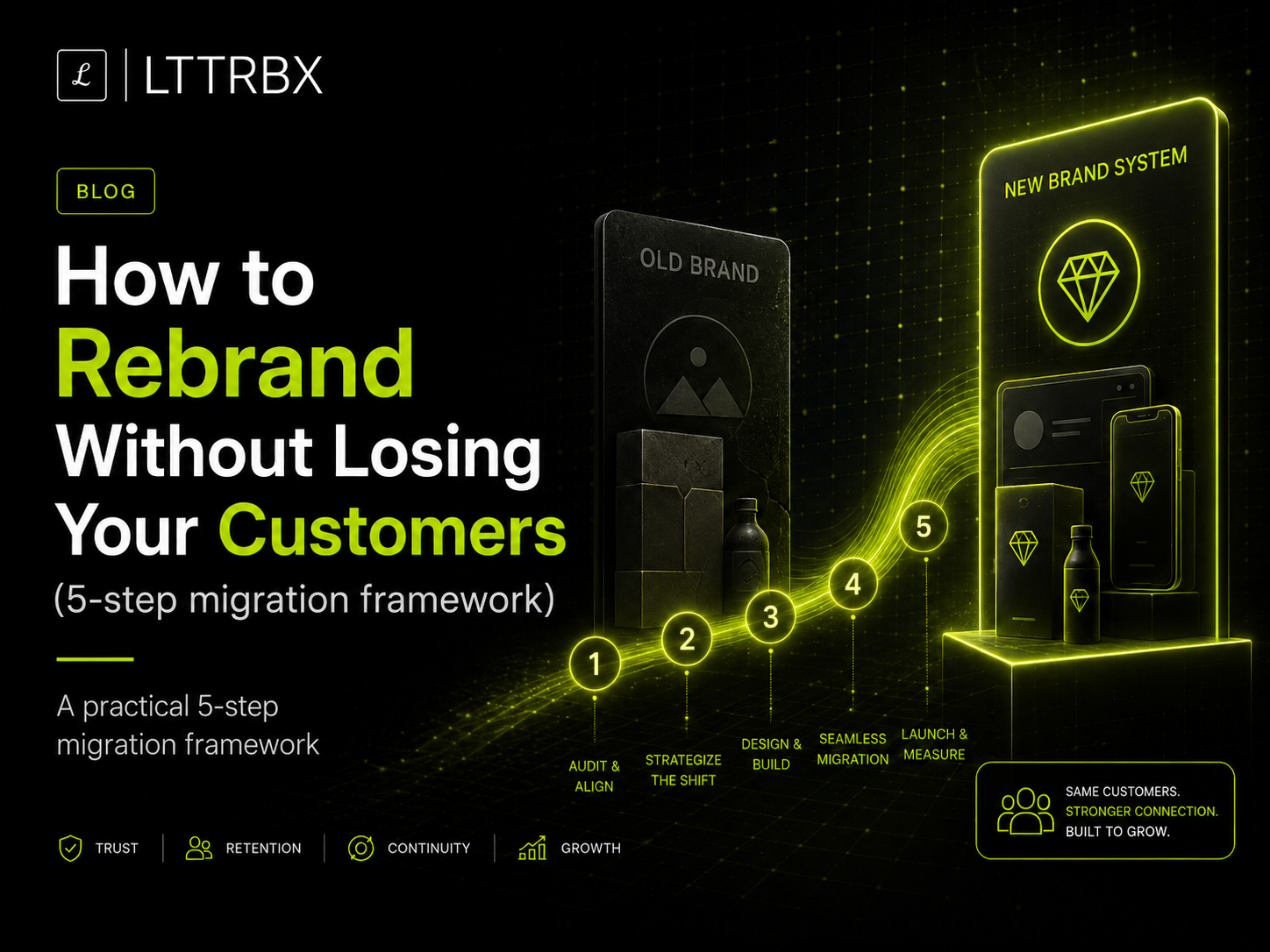
The five-step migration framework
1. Audit — find the equity worth keeping. Before you change anything, map what your customers actually recognise and value: a colour, a symbol, a tagline, a tone. This is your brand equity, and blindly throwing it away is the single most common way rebrands lose customers. Keep a thread of continuity.
2. Strategy — decide what's really changing and why. Get clear on the new positioning, audience and message. Everything downstream should trace back to a reason. “It felt dated” isn't a strategy; “we're moving from a local service to a national product” is.
3. Design — evolve, don't erase. Build the new identity so it carries forward the equity you identified in step one wherever possible. Evolution keeps recognition intact; a total reset spends it. Pressure-test the new system on your real touchpoints before you commit.
4. Rollout — stage it, don't flip a switch. Plan the order: internal team first, then digital, then physical and packaging. A staged rollout lets you catch problems early and gives customers time to adjust, instead of a jarring overnight change that reads as “is this even the same company?”
5. Launch — announce it, explain it, own it. Tell customers what's changing and why, and make the story a positive one about your growth. A rebrand you explain is a milestone; a rebrand you hide is a source of confusion. Over-communicate.
The mistakes that lose customers
- The silent overnight switch. Changing everything with no warning or explanation. Customers notice, and confusion isn't a good first impression of the “new” you.
- Throwing away recognisable equity. Dropping the one colour or symbol customers associate with you, for no strategic reason.
- No transition period. Not running old and new side-by-side for a while, so there's no bridge for existing customers to cross.
- Rebranding to fix a business problem. A new look won't cure bad product or service. Fix the substance; then rebrand to reflect it.
The bottom line
A good rebrand feels, to your customers, like your business grew up — not like it was replaced. Preserve what they value, change what you must, move in stages, and tell the story. That's how you get the repositioning upside without the churn. At LTTRBX we run rebrands as migrations, not demolitions — and because we also rebuild the website and touchpoints the new brand lives on, the rollout actually ships on time instead of stalling between vendors.
Frequently asked questions
Will I lose customers if I rebrand? Not if you preserve your recognisable equity, roll out in stages and communicate clearly. Customers churn during rebrands mainly when the change is sudden, total and unexplained.
How long does a rebrand take?
A focused identity refresh can take a few weeks; a full strategic rebrand with rollout across touchpoints is typically a few months. A clear roadmap up front keeps it predictable.
Should I keep my old logo during the transition?
Often yes. Running old and new side-by-side for a transition period gives customers a bridge and softens the change.