.png)
The short answer. A logo is a single mark. A brand identity is the full visual system built around it — colour, type, layout and rules. A brand is the reputation that lives in your customer's mind. You need all three, but they cost different amounts and do different jobs, and confusing them is how businesses either overpay or underbuy.
“We need branding” almost always means one of three different things, and the gap between them is thousands of rupees and months of work. Get the distinction right and you buy exactly what your business needs. Get it wrong and you either pay for a logo and expect a brand's results, or pay for a full brand when a logo would have done for now. Here's the clearest way to think about it.
The three layers, defined
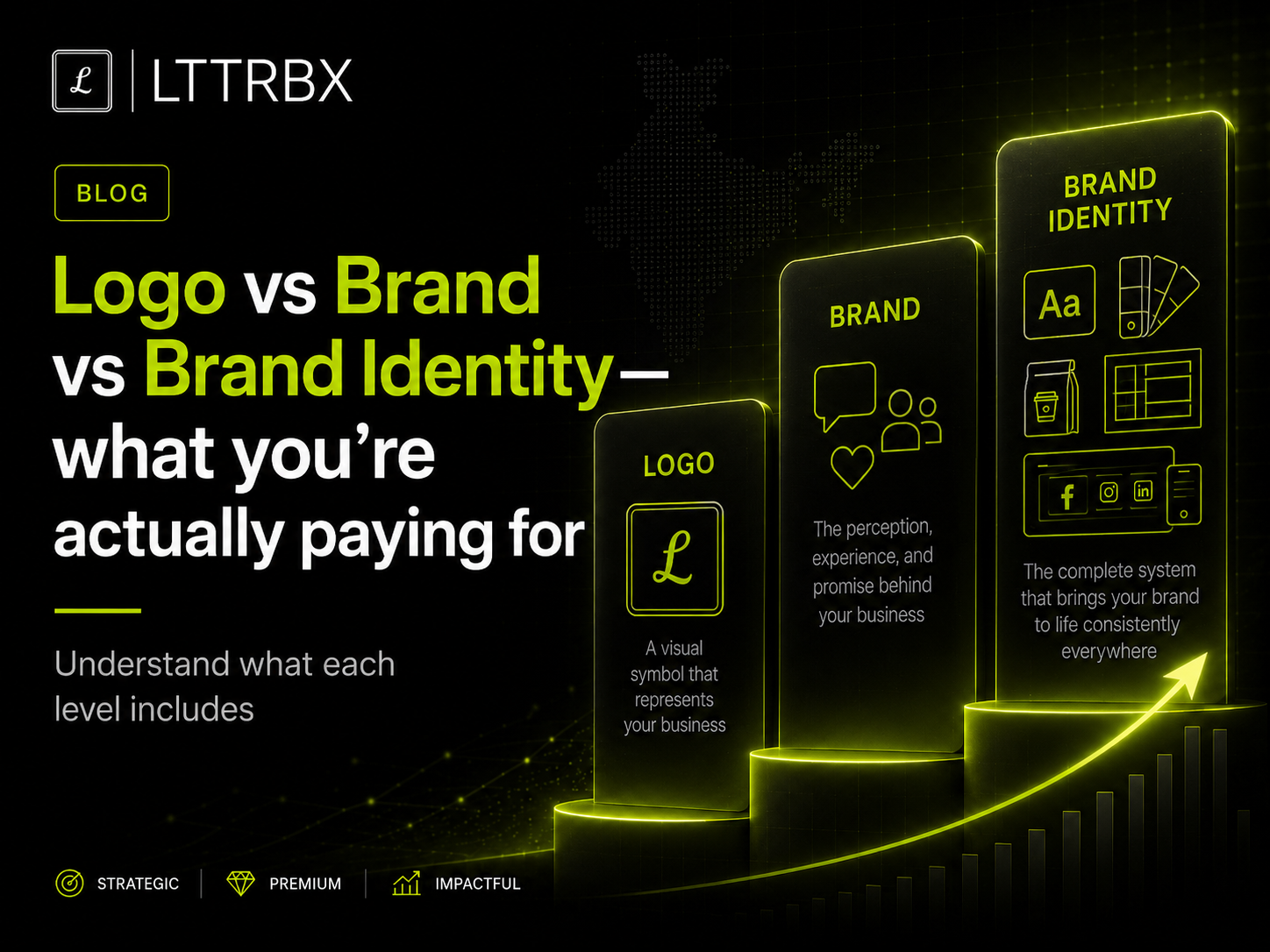
The logo is the mark — the symbol or wordmark people recognise you by. It's important, but on its own it's just one asset.
The brand identity is the complete visual system: the logo plus your colours, typography, iconography, imagery style, layouts and the guidelines that govern how they're used. It's what makes everything you produce look unmistakably like you, whether it's a package, an ad or an app screen.
The brand is the biggest and least visible layer — the sum of everything a customer thinks and feels about you. It's shaped by your positioning, your voice, your promise and, above all, your consistency. You don't design a brand directly; you build it, and the identity is one of the main tools you build it with.
An analogy that sticks
Think of a person. The logo is their face — how you recognise them. The brand identity is how they dress, carry themselves and speak — the consistent style that tells you who they are before they say a word. The brand is their reputation — what everyone says about them when they leave the room. A great face doesn't fix a bad reputation, and a strong reputation survives a change of haircut. Same with businesses.
At a glance
Why confusing them costs money
Two expensive mistakes come from mixing these up. The first is buying a cheap logo and expecting brand results — wondering why a new mark didn't change how customers value you. It couldn't; a logo isn't a brand. The second is over-investing in a full brand system before you've validated your business, when a solid logo and basic identity would have carried you until you had the traction to justify more. Matching your spend to the layer you actually need is the whole skill.
What your business needs at each stage
- Just starting / testing the market: a professional logo and basic identity. Look credible, stay consistent, keep your options open.
- Growing and scaling: a full brand identity with guidelines, so ten people and five vendors all produce work that looks like you.
- Competing seriously / repositioning / raising money: brand strategy first, then identity and rollout — because now the thinking matters as much as the look.
At LTTRBX we scope to the layer you're actually at, and — because we also build the websites and products your identity lives on — we make sure each layer plugs cleanly into the next as you grow.
Frequently asked questions
Is a logo the same as branding?
No. A logo is one visual asset. Branding is the much bigger job of shaping how customers perceive your business, of which the logo is only a part.
Do I need a full brand identity or just a logo? If you're early and testing the market, a professional logo and basic identity is usually enough. Once you're scaling across many touchpoints and people, a full identity with guidelines pays for itself in consistency.
What comes first — strategy or design?
Strategy. Positioning and messaging decide what the design needs to communicate. Designing first is guessing.