.png)
The short answer. A CRM manages the outside of your business — customers, leads and sales. An ERP manages the inside — inventory, orders, billing, accounts and operations. Custom software does what neither off-the-shelf option can, built exactly to your process. Many growing businesses eventually need a CRM and an ERP that talk to each other, with custom pieces for whatever makes them unique.
ERP, CRM, custom software — the terms get thrown around interchangeably, and buying the wrong one wastes months and lakhs. The good news: the distinction is actually simple once you know what each is for. Here's the plain-language version, plus a decision guide.
What each one actually does
CRM (Customer Relationship Management) manages everything facing your customers: leads, contacts, the sales pipeline, follow-ups, deals and customer history. If your pain is “we're losing track of leads and not following up,” you're looking for a CRM.
ERP (Enterprise Resource Planning) manages everything inside your business: inventory, purchasing, orders, invoicing, accounts, and often HR — all connected so a sale updates stock, billing and books at once. If your pain is “our operations are scattered and nothing talks to anything,” you're looking for an ERP.
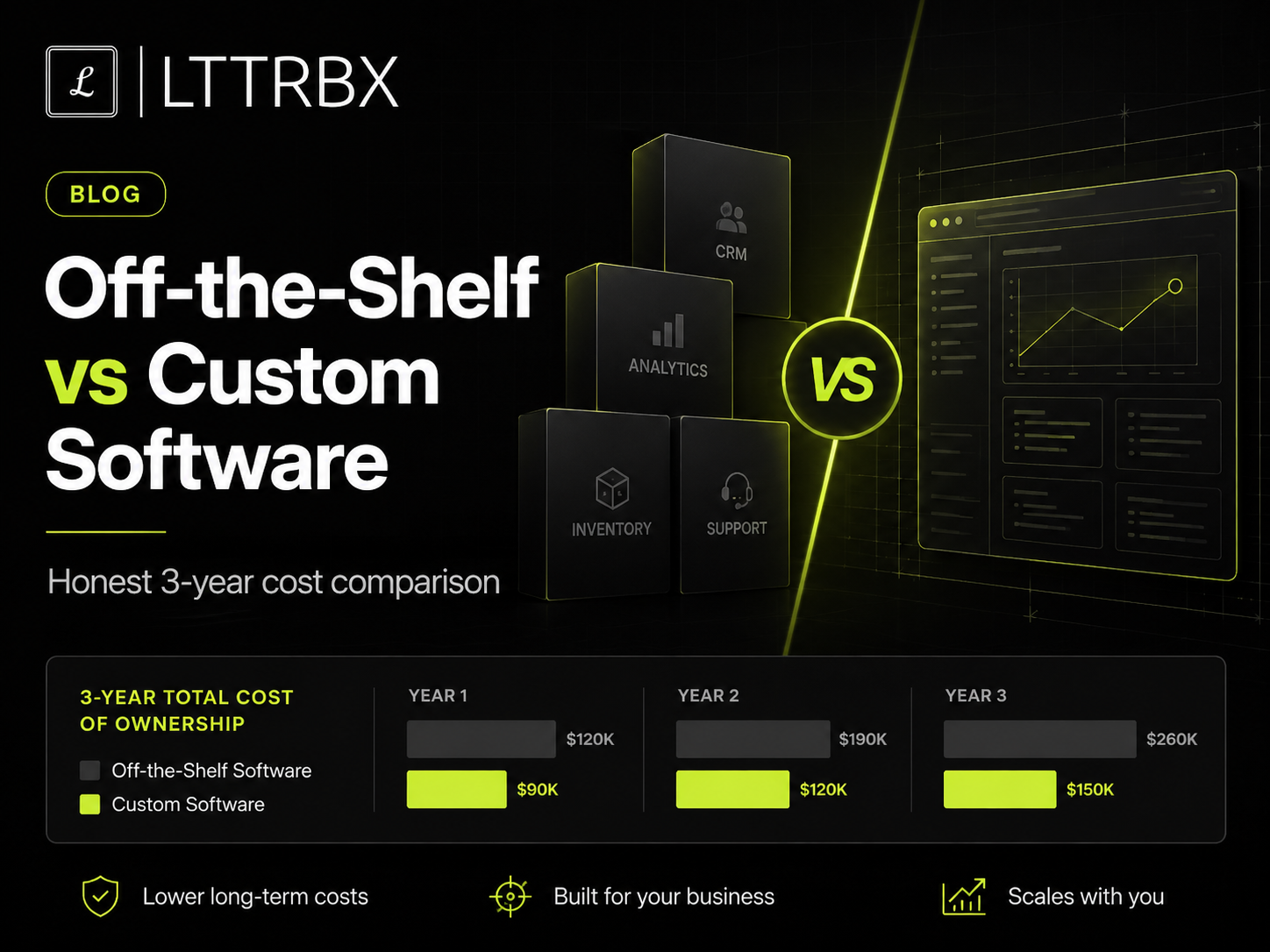
Custom software is built for your specific process when no off-the-shelf CRM or ERP fits without painful compromise — or to handle the one workflow that's genuinely unique to how you operate.
At a glance
A quick decision guide
Choose a CRM if your biggest problem is managing customers, leads and sales follow-up.
- Choose an ERP if your biggest problem is internal operations — inventory, orders, billing and accounts not working together.
- Choose custom software if your process is unusual enough that ready-made tools would force you into awkward workarounds, or if a specific workflow is your competitive edge.
- You may need a mix. Larger businesses often run a CRM and an ERP together, integrated so customer and operational data flow between them — sometimes with a custom layer bridging the two.
How they connect
The magic isn't any one system — it's the connection. When your CRM and ERP share data, a closed sale automatically updates inventory, triggers an invoice, and reflects in your accounts, with no re-entry. That end-to-end flow is where the real efficiency lives, and it's why picking tools that can integrate (or building them to) matters more than any single feature.
At LTTRBX, our BOX product suite covers CRM, ERP and industry-specific systems, and our team builds the custom pieces and integrations that tie them to how you actually work — so you get one connected system, not three islands.
Frequently asked questions
What's the difference between ERP and CRM? A CRM manages customer-facing activity — leads, sales and follow-ups. An ERP manages internal operations — inventory, orders, billing and accounts. Many businesses eventually use both, integrated.
Do I need both an ERP and a CRM? Smaller businesses often start with just one, based on where the pain is. As you grow, running both — connected so data flows between them — usually becomes worthwhile.
When is custom software better than ERP or CRM?
When your process is unusual enough that ready-made tools require heavy workarounds, or when a specific workflow is a competitive advantage you want built exactly to your needs.